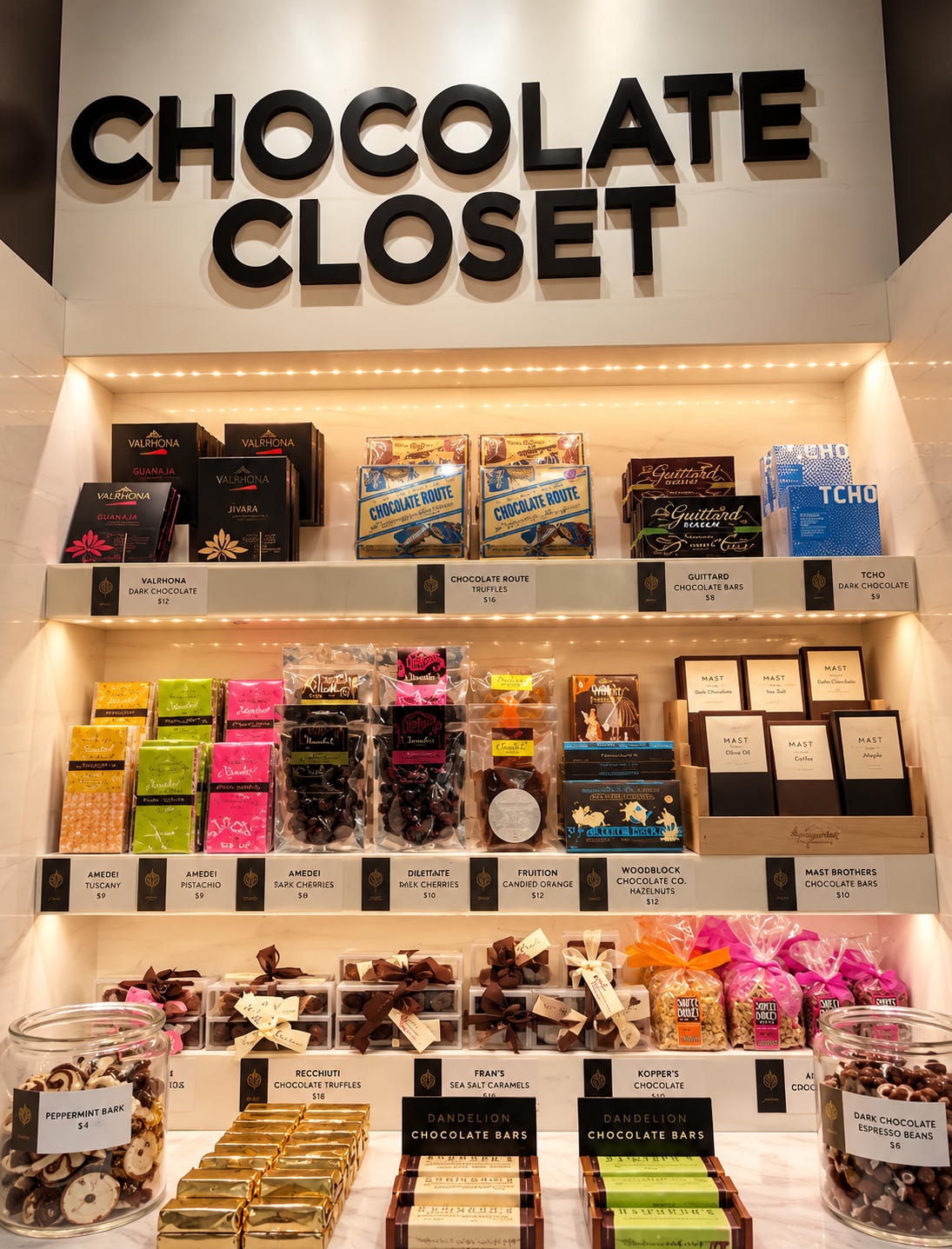
From Storage System to Status Symbol
How did an industry that started with making better use of a box (a closet) become culturally entangled with architecture, fashion, celebrity, identity, consumption, wealth, and aspiration?
What started decades ago as an improvement to a box—the closet—with double hang and shelves has now evolved through an interesting path that crosses all of these specialties, with fashion and celebrity leading the way.
Translation: if you are in the custom storage industry or you’re an interior design professional and you’re still thinking that closets are just about organized storage - you’re missing most of the current picture.
And I’m not going to express this concept by tying it to one of the most over-used terms in everyday vernacular - dream closets.
Let’s reframe.
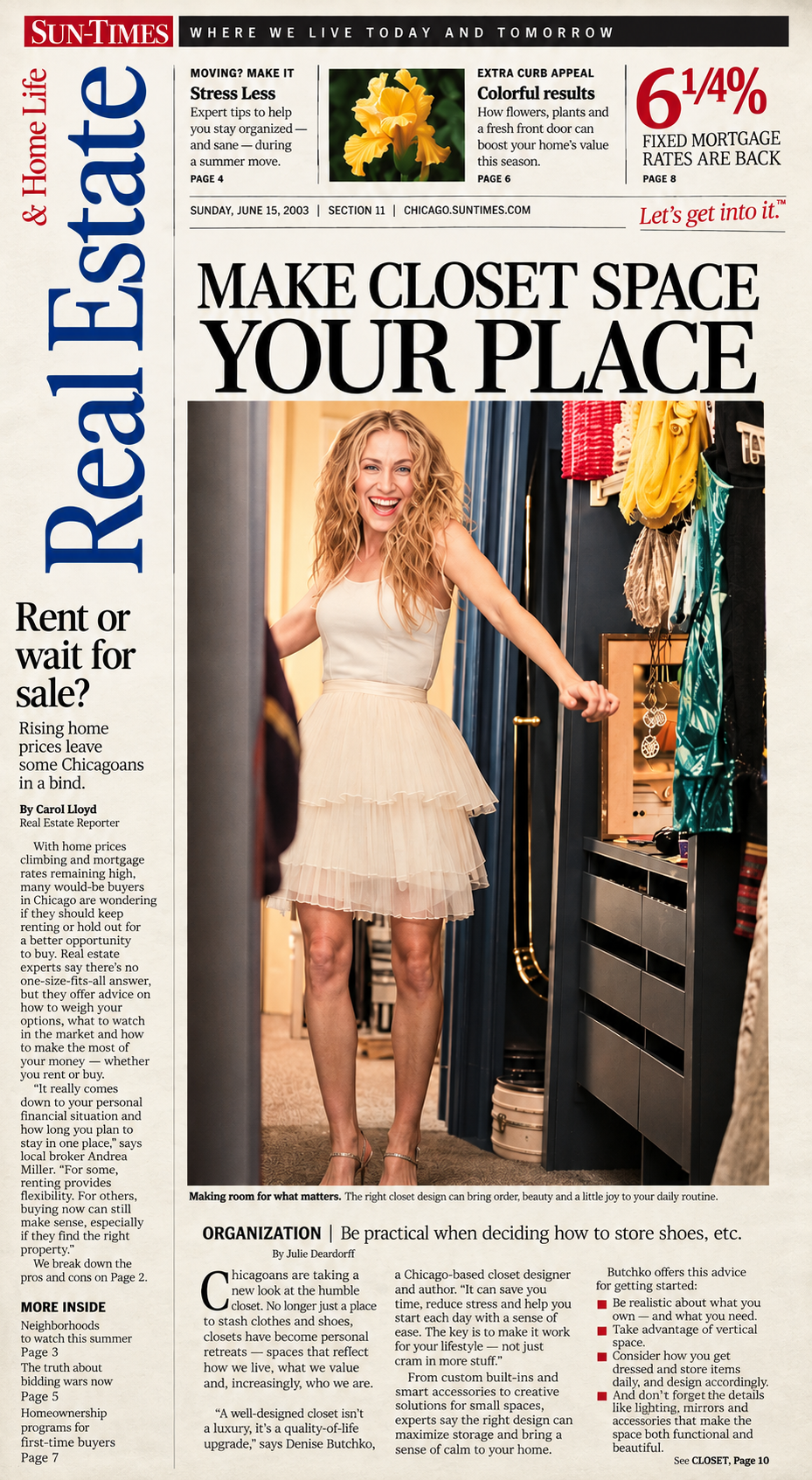
Before the Kardashians opened their closet doors, Sex and the City had already made the closet part of the cultural conversation.
Carrie Bradshaw’s clothes were inseparable from her identity. And when Mr. Big gave her that walk-in closet, it wasn’t presented as an improvement in storage capacity. It was romance. It was recognition. It was an aspiration expressed through architecture. The message was: I see who you are, I understand what matters to you, and I’ve created a space for it.
It was fictional, but its cultural influence was very real. The closet was no longer simply the place where Carrie kept her clothes. It became part of the story of who she was—and the life she imagined for herself.
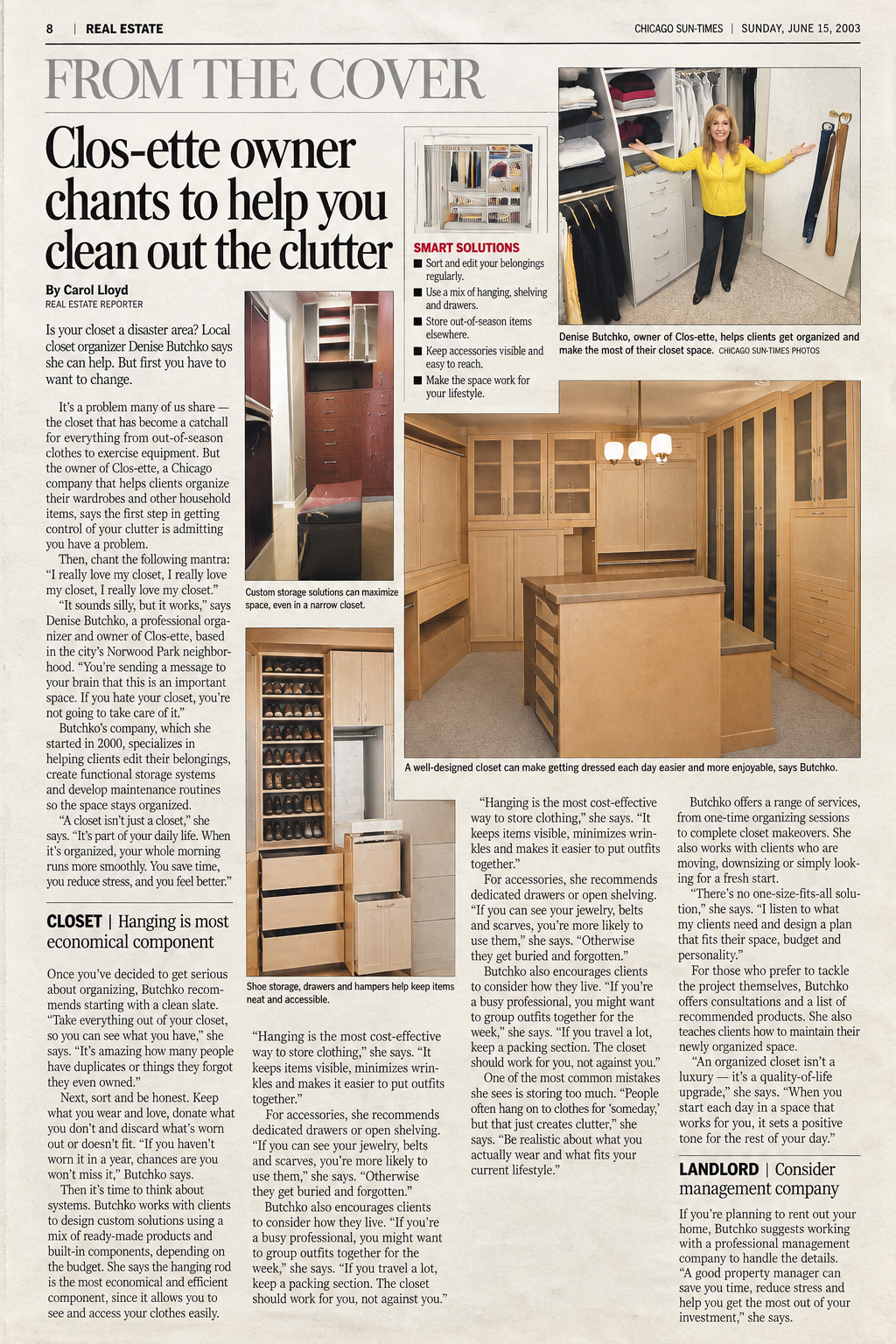
And then came the Kardashians.
We all know them. I'm not here to debate what your personal thoughts are about that family. I'm making a point that they almost single-handedly flipped—exposed, if you will—aspects of an industry most people had no idea existed.
They literally opened up their closet doors to let us become voyeurs: to see the designer purchases, to see the fashion, and to take in, if you're paying attention, how that tied to identity. Because it does, whether you like it or not. A level of consumption, whether you're Kermit the Frog green and environmental or you're absolutely, a consumer riding the consumption train (no judgement)—it all pulls in.
That family also gave way to wealth and aspiration as status symbols in the closet and in fashion. Many of the most elaborate, customized storage spaces many of us have had the privilege of designing had their beginnings in an episode of the Kardashians.
But even predating the Kardashians, how many of you are familiar with Rachel Zoe?
Rachel had a show (The Rachel Zoe Project on Bravo).
Television involved, yes.
Celebrities involved, yes.
Dressing celebrities for award shows, yes.
But what Rachel Zoe, as a stylist with a business, built is showing a cultural influence that's connected to an industry's revolution—and evolution.
She isn't so much a famous person with a closet. It's from the angle of a wardrobe as a curated collection worthy of display. It's that consistency of being who you are, how you want to be perceived, and doing that through the items that are in your closet, because those are the key tools for how you are perceived. People look at what you're wearing and carrying when you show up.
That kind moves us to what I've talked about with the Kardashians, where the room itself communicates the status—the room and the things inside the room. They blended both.
Fast forward a couple years and bring Nate Berkus into this picture. Nate Berkus, famous from The Oprah Winfrey Show, was an interior designer discovered by one of her producers. He ended up having his own show, but he absolutely has a thing for closets and gave design legitimacy, in many ways, to a closet. That’s a huge shift.
Closets became a legitimate space worthy of professional interior/architectural design.
Because, again, we started with white melamine. We went from a wooden rod and a shelf to white melamine, double hanging and shelves. And now culture and life and technology have evolved us, and we continue to design in the thick of this evolution.
Because then Nate meets Jeremiah Brent. Jeremiah worked for Rachel Zoe at one point. Now he’s married to Nate Berkus. And Jeremiah Brent has a contract for a podcast with California Closets. So we've brought this thing a bit full circle.
In the world of the Kardashians, and even in the personal world of Nate Berkus, I think they go beyond the bounds of a systematized closet, which is what most people have and what most closet companies are.
They’re built on efficiency, production, board yield—84 inches high or 96 inches high, 14 inches deep, maybe 16 inches deep—storage, functional storage.
Then we have these other people elevating it.
So what has happened now is that, if we go back to Jeremiah Brent and California Closets, it is a systematized, nationally accessible closet brand—California Closets—and then they're bringing Jeremiah Brent to the table, who comes from a more luxurious world. Self taught, but immensely successful with an internationally recognizable brand.
So we've moved from a box and closet as function, to wardrobe as a collection, to closets as spectacle—they're very entertaining—to closet as a designed room, and then closet design as an aspirational mainstream category.
And so, underneath all of that, how did a room that was historically intended to hide our stuff become one of the rooms we're most eager to show people after we've had it designed—and before we mess it up again?
I find the evolution fascinating and inspirational. I love the meandering path our industry has wandered in order to arrive here - and keep evolving and moving forward. With design becoming the dominant voice - not production and board yield.